Spinobria
Fermentation-derived chemistry with the speed of a synthetic insecticide.
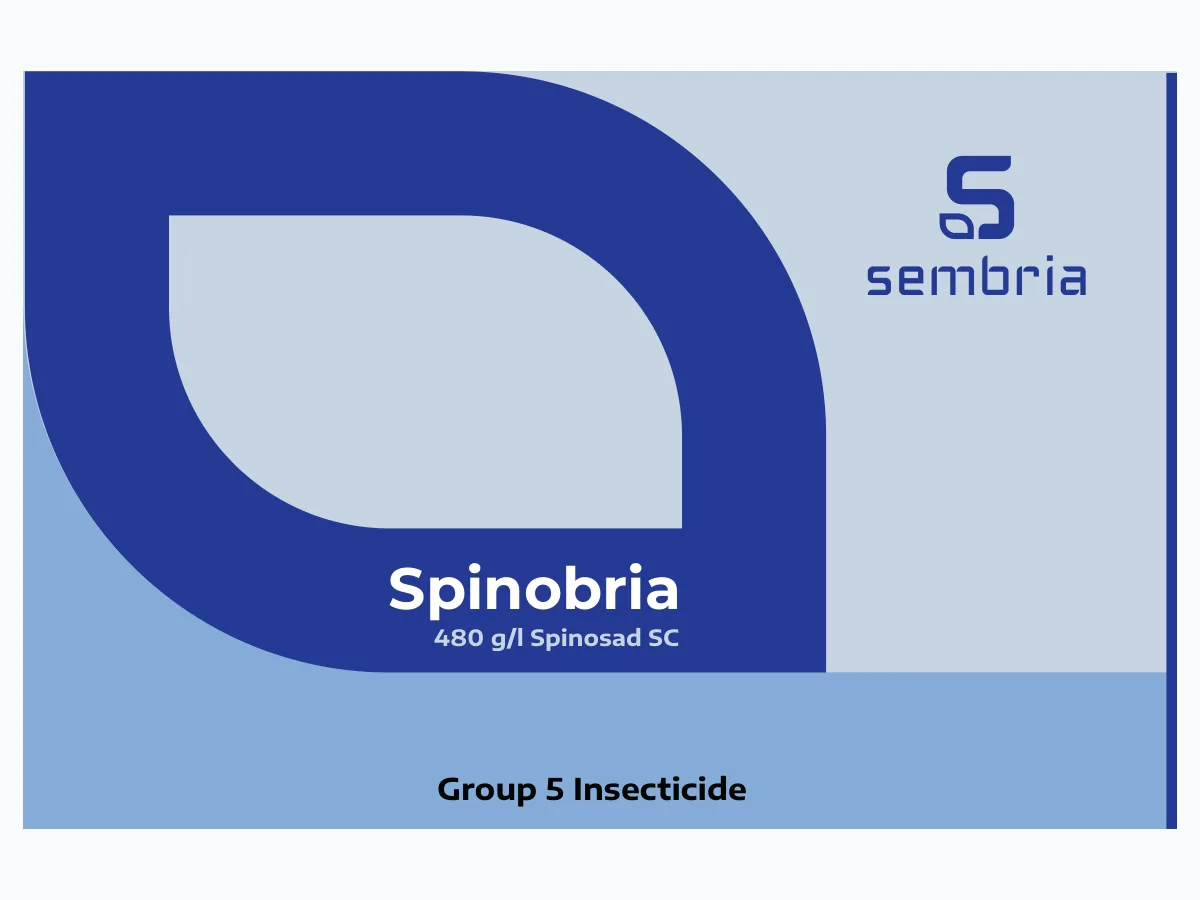
Spinobria is based on spinosad, a mixture of natural metabolites produced by the soil bacterium Saccharopolyspora spinosa. It combines something growers rarely get together: the origin and residue profile of a biological product with knockdown that matches synthetic chemistry. It is the reference product for western flower thrips and leafminer flies, works by both contact and ingestion, and carries a three-day pre-harvest interval on most vegetable uses.
Characteristics
- Derived by fermentation from a naturally occurring soil bacterium
- The reference standard for western flower thrips and leafminer control
- Contact and stomach action; fast cessation of feeding
- IRAC Group 5 — a unique mode of action for resistance rotation
- Three-day pre-harvest interval on most vegetable crops
- Low rates: 10-30 ml/da or 10-30 ml/100 L water
How it works
Spinosad activates nicotinic acetylcholine receptors at a binding site distinct from that of the neonicotinoids, and also affects GABA receptors. The insect suffers involuntary muscle contractions, tremors and paralysis, and dies within one to two days. Because the binding site is unique, there is no cross-resistance with any other insecticide group. IRAC Group 5.
Dosing
| Crop | Target pest | Dose | PHI (days) |
|---|---|---|---|
| Bell pepper (greenhouse) | European grapevine moth (larva) | 10 ml/100 L water | - |
| Grapes | Grape thrips (larva, adult) | 20 ml/100 L water (larva, adult) | 14 |
| Tomato (greenhouse) | Tomato leaf miner (Tuta absoluta), larva | 25 ml/100 L water | 3 |
| Tomato (greenhouse) | Cotton leafworm (larva) | 30 ml/100 L water | 3 |
| Pickling cucumber (greenhouse) | Leafminer flies (larva) | 25 ml + 125 ml horticultural oil / 100 L water | 3 |
| Cucumber (greenhouse) | Leafminer flies (larva) | 25 ml + 125 ml horticultural oil / 100 L water | 3 |
| Eggplant (greenhouse) | Western flower thrips (larva, adult) | 20 ml/da | 3 |
| Potatoes | Colorado potato beetle (larva, adult) | 10 ml/da | 3 |
| Cotton | Cotton leafworm (larva) | 25 ml/da | 28 |
| Cotton | Cotton bollworm (larva) | 12.5 ml/da | 28 |
| Cotton | Striped leafworm (larva) | 25 ml/da | 28 |
| Strawberry | Western flower thrips (larva, adult) | 20 ml/da | 3 |
| Pistachio | Pistachio psyllid (nymph, adult) | 10 ml + 125 ml horticultural oil / 100 L water | 14 |
| Peaches | Peach twig borer (larva) | 30 ml/100 L water | 14 |
| Hazelnuts | Hazelnut weevil (adult) | 15 ml/da | 14 |
Doses are indicative. The user is responsible for adjusting the dose to the growth stage of the crop and the conditions of the field. Apply under the guidance of an agricultural technician. Composition, method of application and dose may vary between countries for climatic, technical or legal reasons.
Application
How to apply
The product acts by stomach and contact, so complete coverage of the plant surface is essential. It mixes readily with water and can be applied with all standard spraying equipment. Calibrate before application and spray during the cooler hours of the day in calm or low-wind conditions. Where the table specifies a horticultural-oil tank mix, the oil is required for efficacy against leafminer flies and pistachio psyllid.
Compatibility
Conduct compatibility tests before preparing a large tank mix.
Always carry out a compatibility test before preparing a tank mixture.
Safety and handling
Very toxic to aquatic life. Toxic to fish and to bees — do not apply during flowering. Do not expose seeds. May cause temporary, mild eye irritation. Do not re-enter the treated area for 1 day. Collect spillage.
Read the label before use. Do not use at home. Keep away from children, food and animal feed. Use only as recommended and at the recommended dose.
Plant protection product
This page is technical information, not an offer of sale. Availability and registration status vary by territory. Always read and follow the approved product label before use.